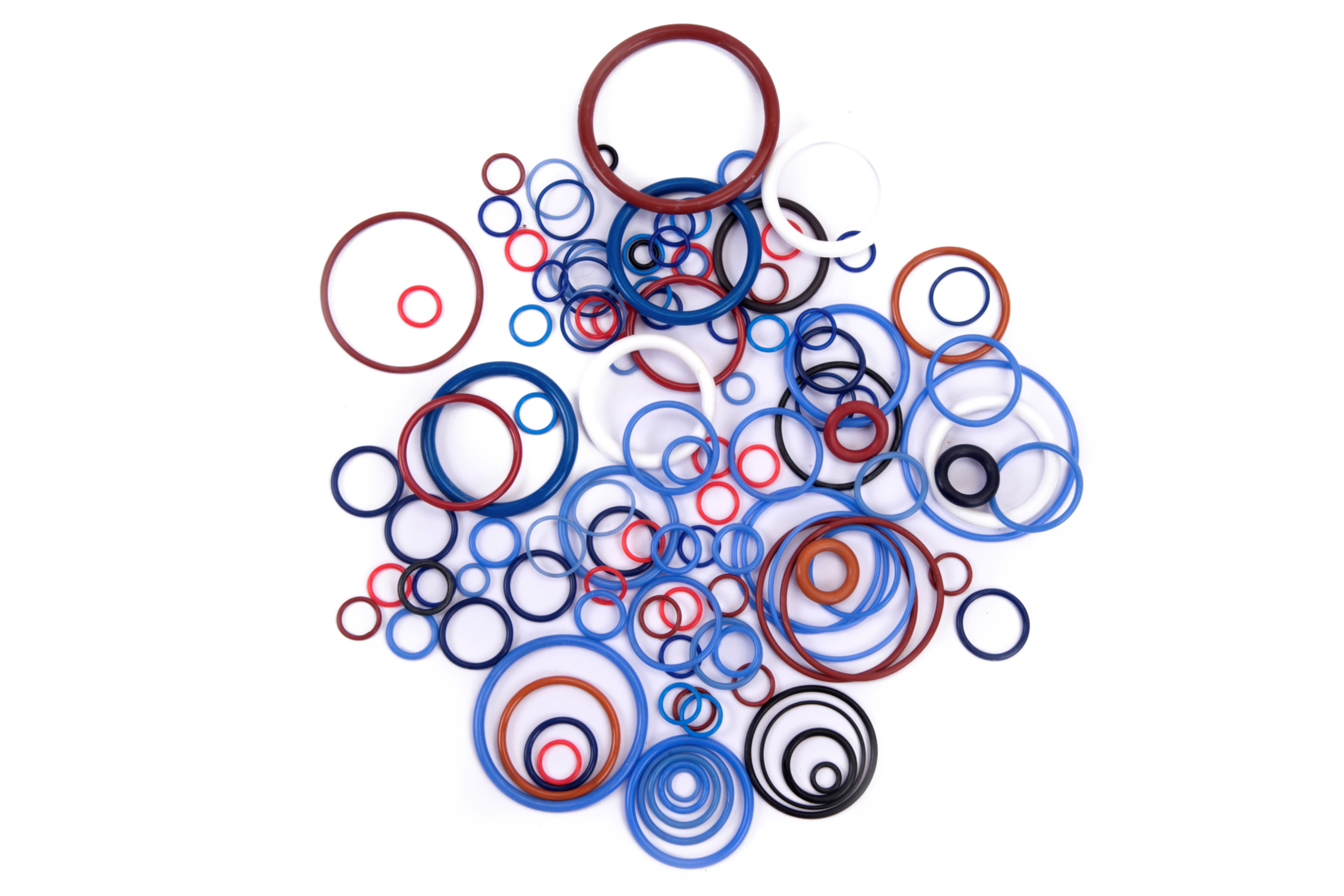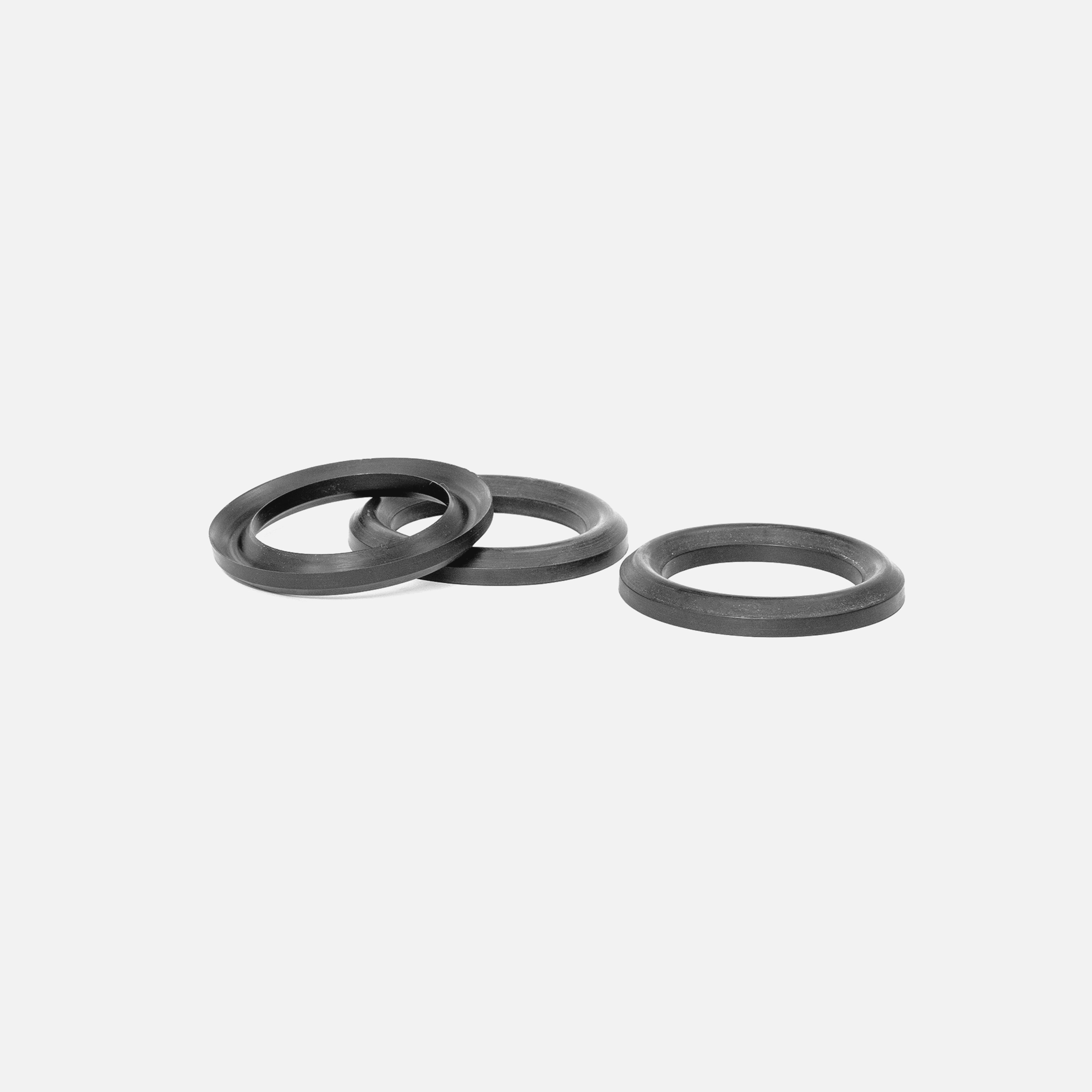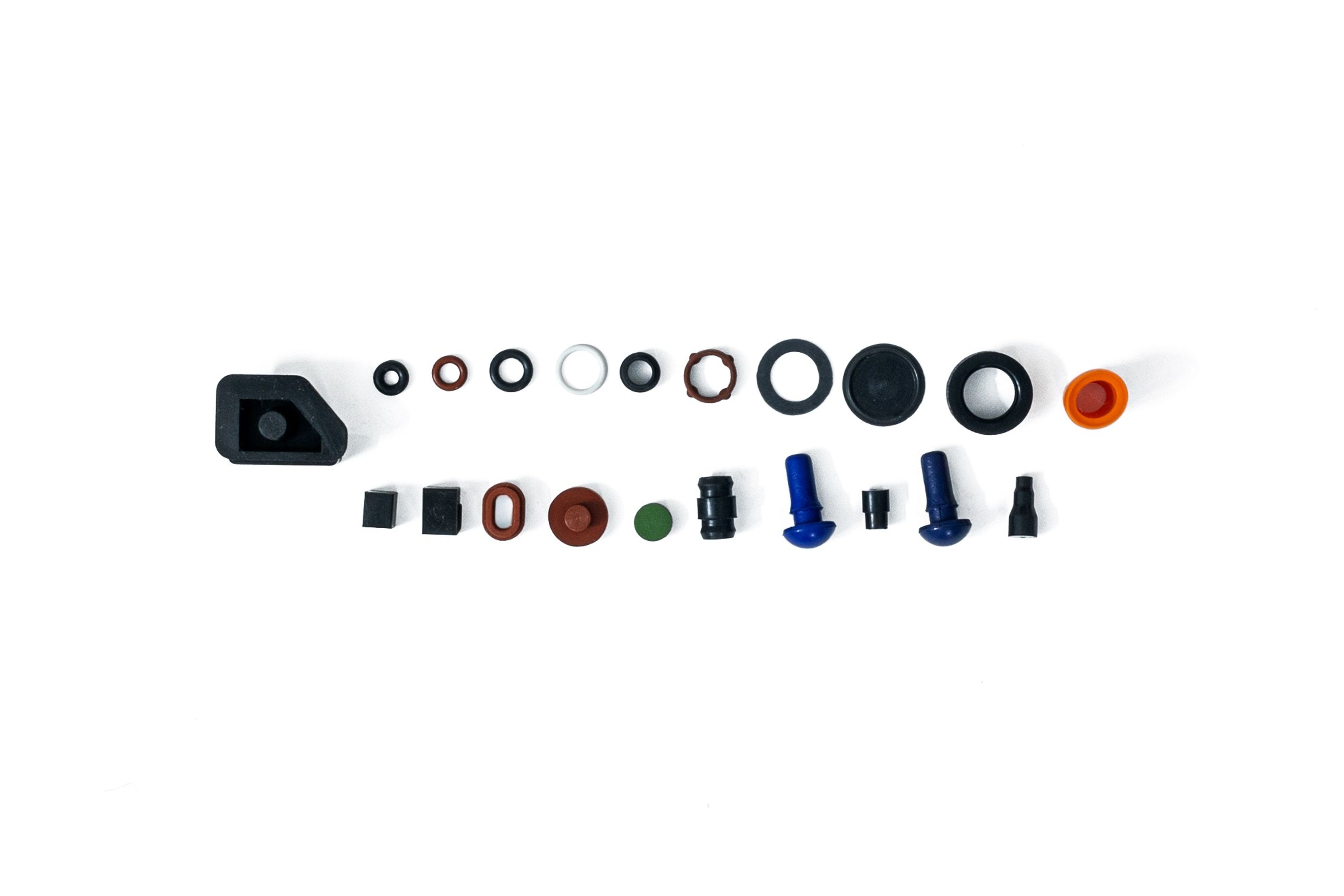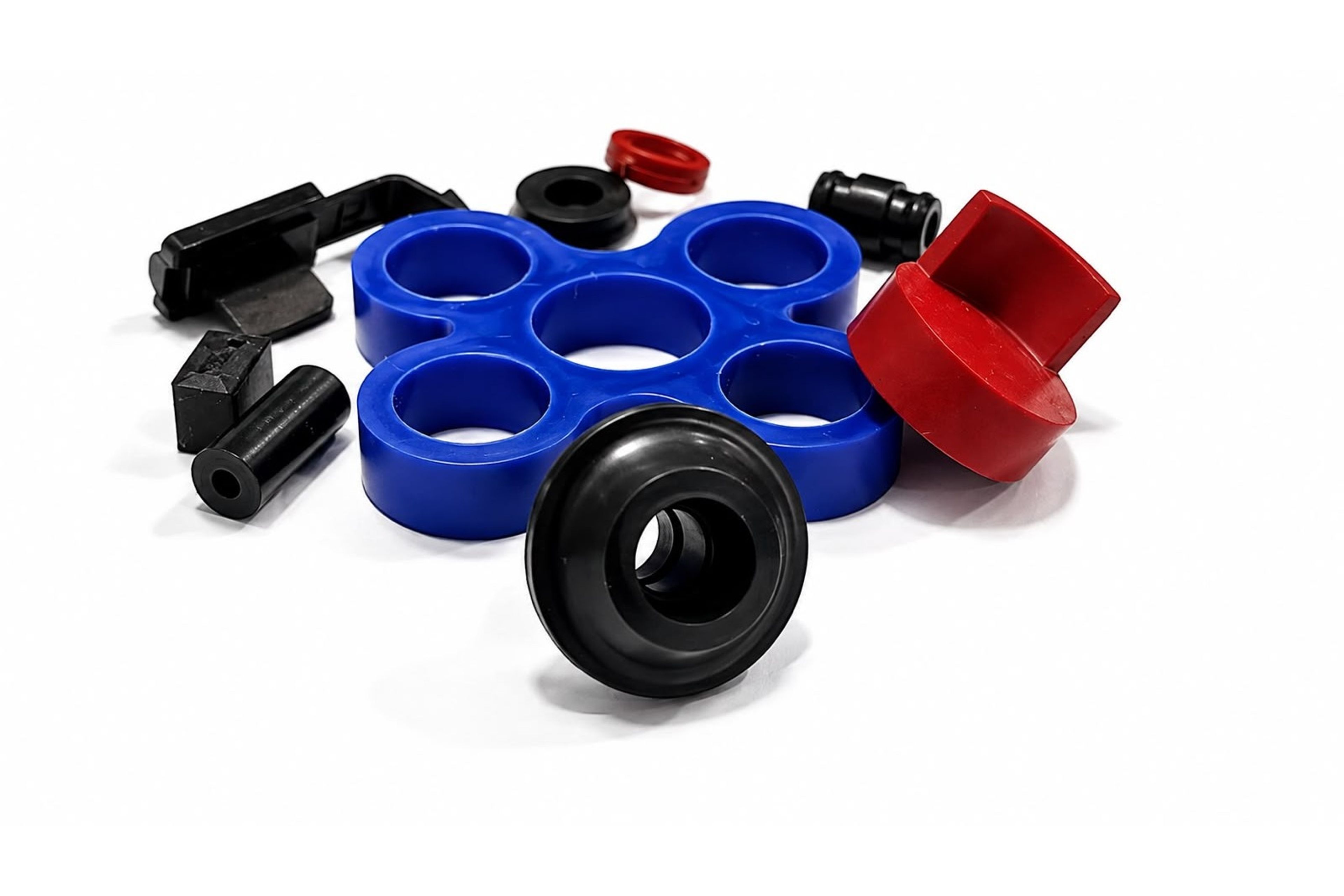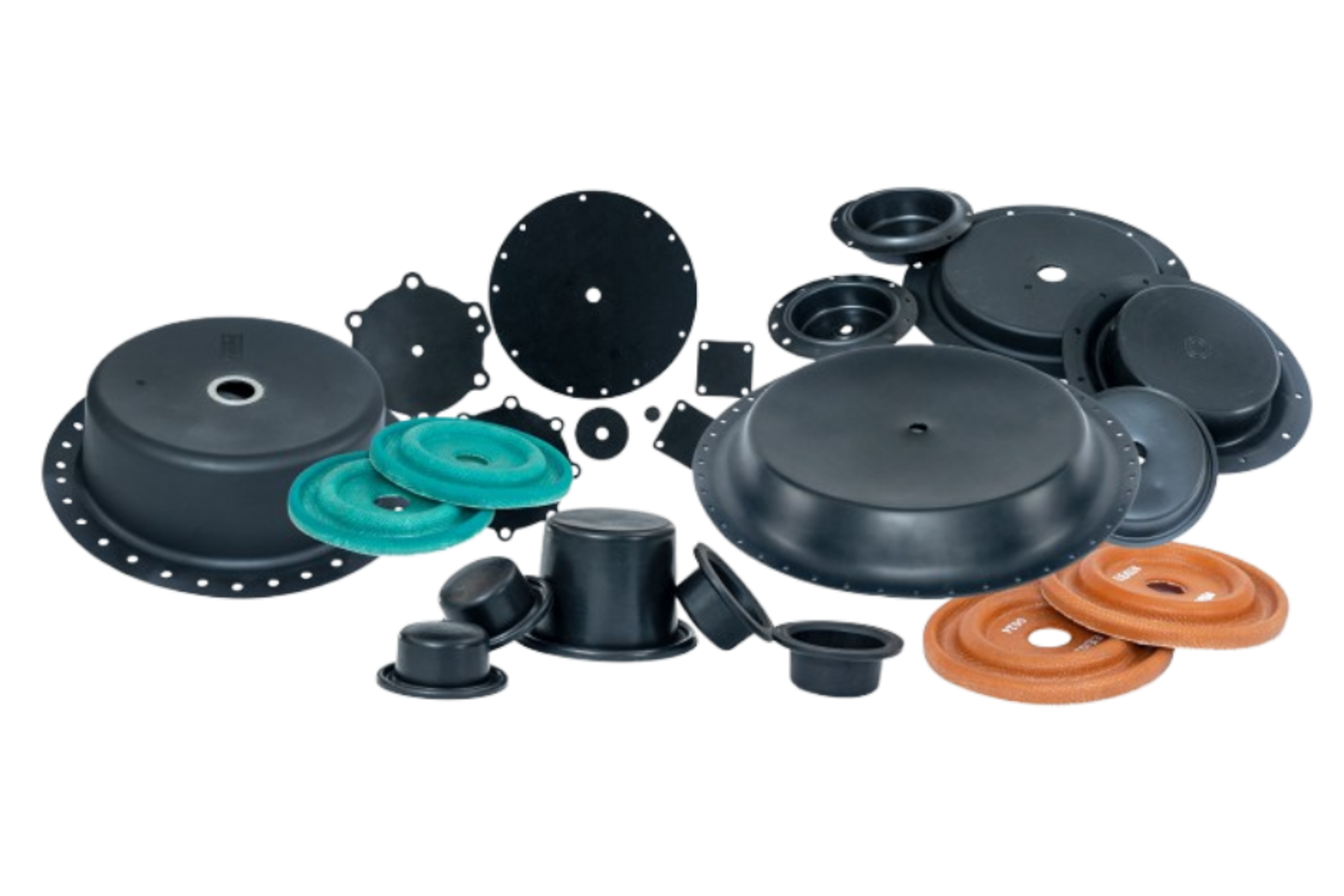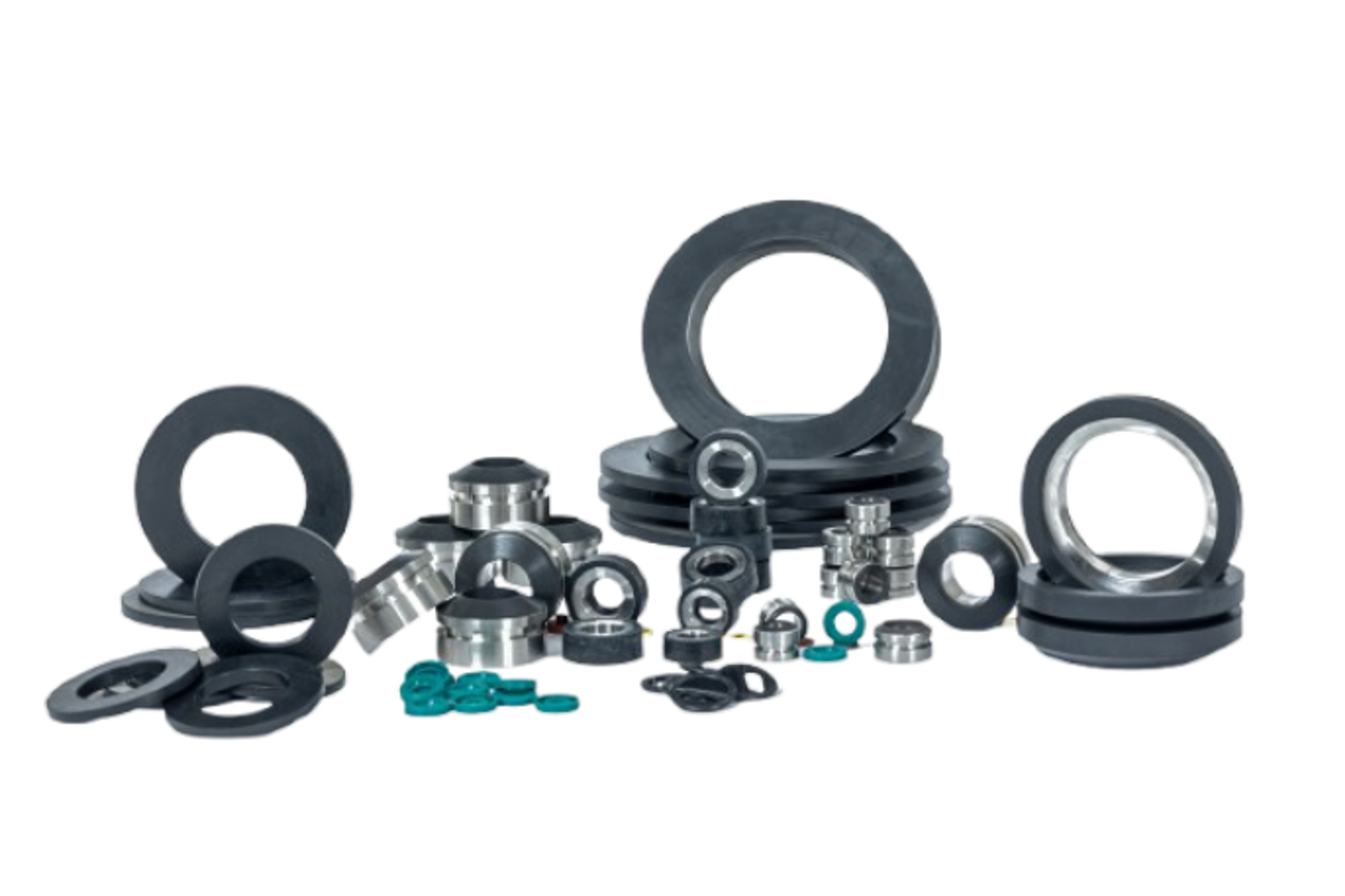
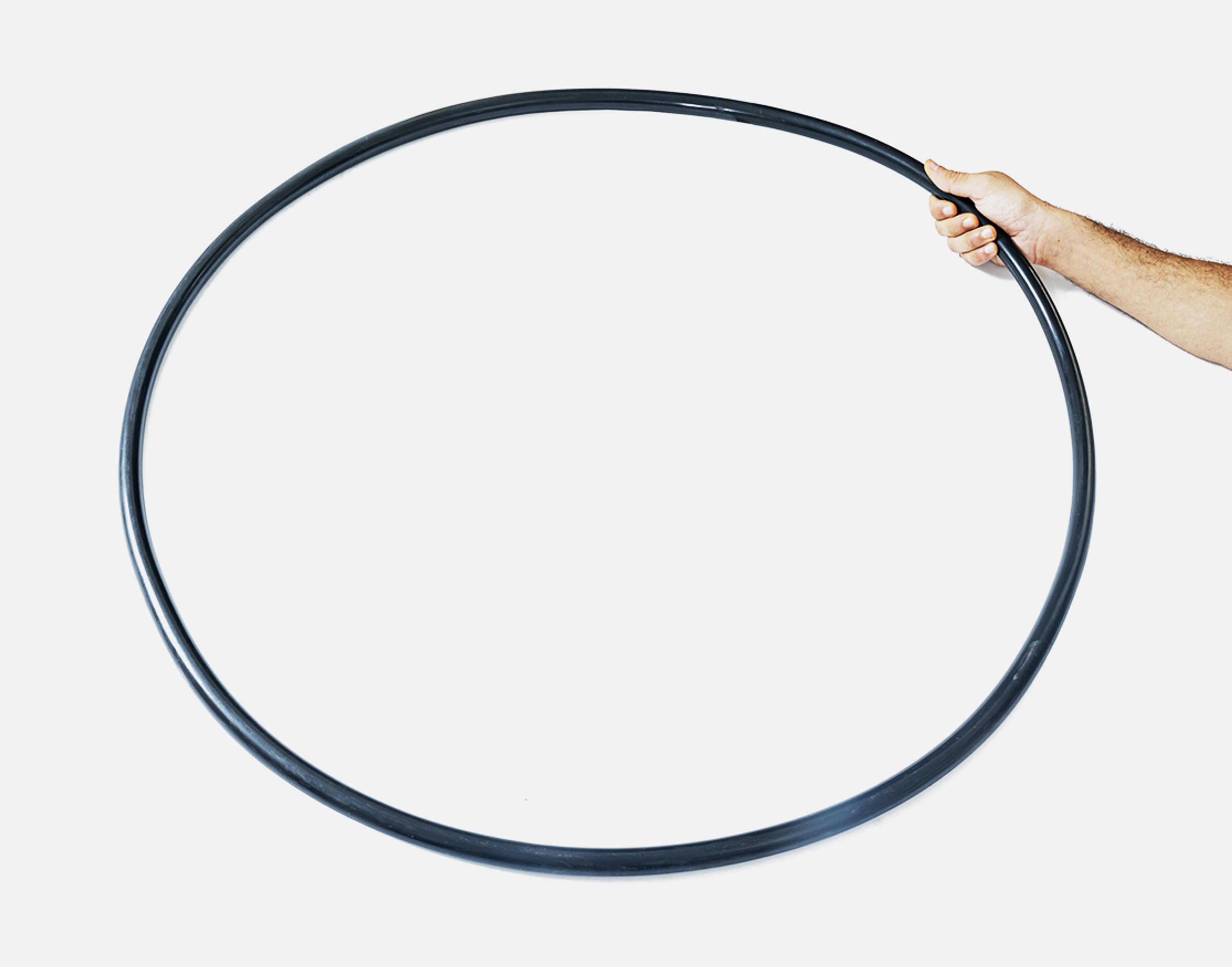
Extensive range of large-sized parts
Large Sized Components
Our extensive range of large-sized parts encompasses a variety of components, including O-Rings, Diaphragms, Seals, and Customized parts. These are one-piece moulded parts engineered with diameters up to 1200mm, maintaining tight tolerances to guarantee optimal performance in your applications.
Salient Features
One-piece molded
Size range
800mm to 1200mm Diameter
REACH, ROHS, EN 549, WRAS
Approved compounds
What are large-sized rubber components?
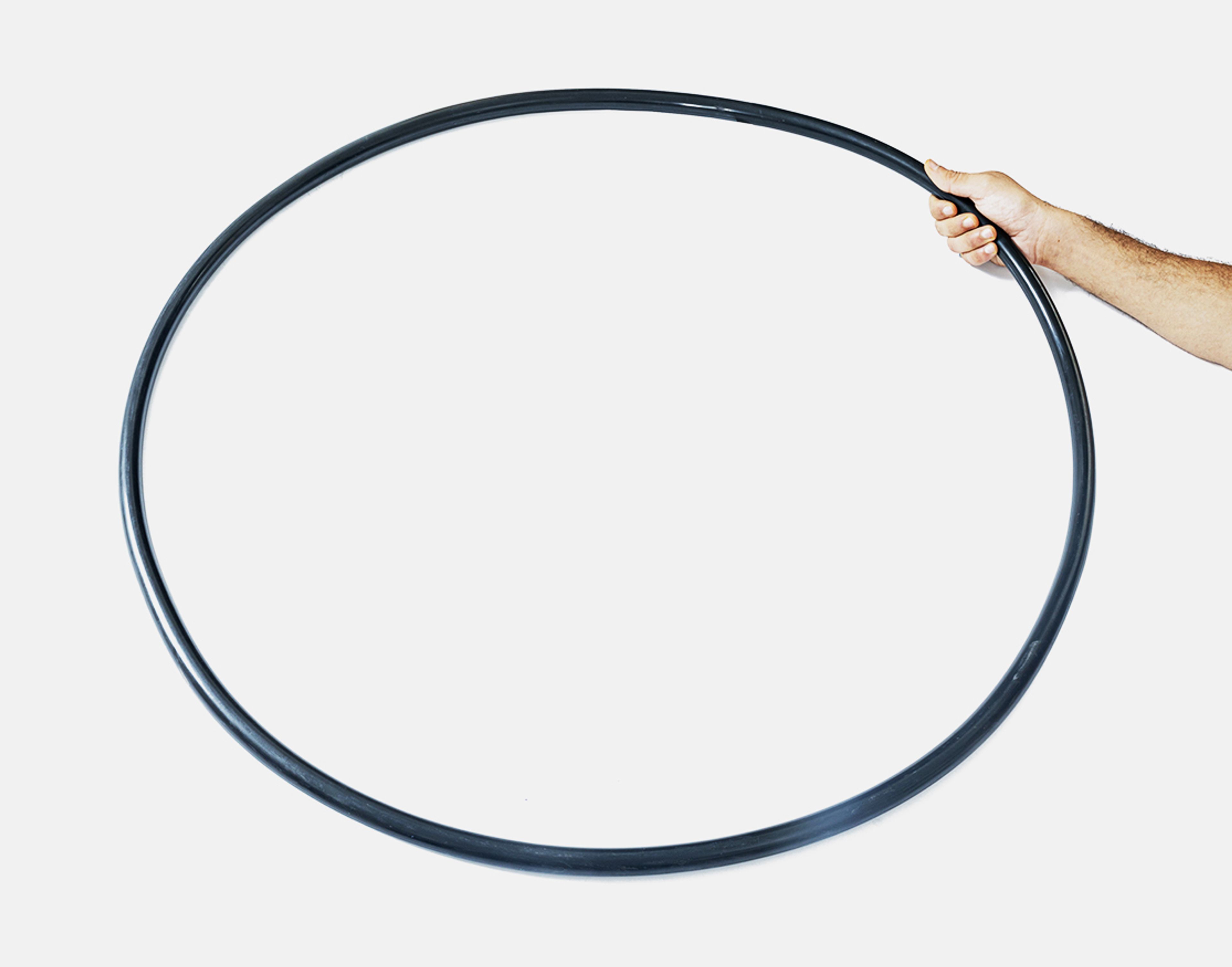
Large-sized rubber components are elastomeric seals, gaskets, and moulded parts from Ø800 mm to 1,200 mm, manufactured as one-piece continuous parts — not segmented or spliced. Harkesh produces large O-rings, hydraulic cylinder seals, valve seats, diaphragms, and custom gaskets in NBR, HNBR, FKM, EPDM, and Silicone, with tolerances to ±0.05 mm and weights up to 50 kg per component. One-piece construction eliminates splice-point failures — the leading cause of large seal leakage.
The sections below cover when to choose one-piece over segmented construction, technical capabilities, material selection, installation best practices, and a real-world case study demonstrating the performance advantage of splice-free seals.
One-piece vs Segmented Construction
Large seals can be manufactured as a single continuous part or assembled from segments. The right choice depends on size, application, and performance requirements.
| Feature | One-Piece Construction | Segmented Construction |
|---|---|---|
| Size range | Up to Ø1,200 mm | Unlimited (joined sections) |
| Splice points | Zero — continuous seal | 2–8 joints depending on size |
| Pressure rating | Full material capability (up to 400 bar) | Limited by splice strength (~60% of base material) |
| Installation | Single-piece placement, no alignment | Requires precise joint alignment |
| Failure mode | Material degradation only | Splice separation under pressure or thermal cycling |
| Lead time | 2–3 weeks (custom mould required) | 1–2 weeks (can use standard stock) |
| Best for | High-pressure hydraulics, critical sealing, long service life | Emergency replacement, very large diameters >1200 mm, low-pressure |
Technical Capabilities
Diameter Range
One-piece moulded, no splices
Weight Capacity
Per component, depending on cross-section
Tolerance
Achievable on large parts via CMM verification
Flash Control
Industry-leading precision on mould parting lines
Temperature Range
Material-dependent (Silicone widest range)
Pressure Rating
NBR/FKM one-piece seals in hydraulic service
Materials for Large Seals
Not all elastomers scale well to large sizes. Material selection must account for weight, handling, and moulding characteristics:
NBR (Nitrile)
Excellent for large hydraulic seals. Good balance of cost, oil resistance, and mouldability at scale.
HNBR
Stronger than NBR with better heat resistance. Preferred for high-load large seals in demanding service.
FKM (Viton®)
Broadest chemical resistance. Heavier and stiffer than NBR — requires careful mould design for large sizes.
EPDM
Excellent for water, steam, and weathering. Lighter weight than FKM, easier to handle at large diameters.
Silicone
Wide temp range but low mechanical strength. Not recommended for dynamic or high-pressure large seals. Best for static, low-load applications.
Need a large seal? Free engineering review with every quote.
Request a quote →How to specify a large seal
Determine size & weight
Measure or specify the inner diameter, outer diameter, and cross-section. Estimate component weight if known — large seals may require reinforcement or special handling.
Choose one-piece or segmented
One-piece construction (up to Ø1,200 mm) eliminates splice failures and is preferred for high-pressure or critical sealing. Segmented designs are fallback for >1,200 mm or emergency replacements.
Select elastomer material
NBR/HNBR for hydraulic oil, FKM for broad chemical resistance, EPDM for water/steam. Material choice affects mouldability at large scale — consult before finalizing.
Specify tolerance & testing
Large seals are less forgiving of groove dimensional errors. Specify ±0.05–0.2 mm tolerance depending on criticality. Request CMM inspection report if needed.
Plan installation method
Seals >1,000 mm require specialized tooling (installation cones, lifting slings). Review installation guide before ordering to ensure you have the necessary equipment.
Validate lead time
Large custom moulds take 2–3 weeks. For urgent requirements, consider die-cut prototypes from sheet stock as interim solution while moulds are being produced.
Common large-component failures
Abrasion
Continuous friction against mating surfaces or abrasive materials gradually wears away the rubber surface. Excessive wear can reduce dimensional accuracy, compromise functionality, and shorten the component's service life.
Cracking
Surface cracks can develop due to prolonged exposure to ozone, UV radiation, ageing, repeated flexing, or mechanical stress. Over time, these cracks may propagate and lead to reduced performance or complete component failure.
Deformation
Excessive mechanical loads, improper design, or incorrect material selection can permanently alter the component's shape. Deformation may result in poor fitment, uneven load distribution, reduced sealing efficiency, and premature failure.
1200mm Hydraulic Cylinder Seal for Mining Equipment
Challenge
A mining equipment manufacturer experienced monthly failures in a large hydraulic cylinder seal. The original design used a 4-piece segmented FKM seal with vulcanized splice joints.
Problem
Under operating pressure (350 bar) and thermal cycling (−30°C to +120°C), the splice joints separated, causing catastrophic fluid loss and unplanned downtime.
Solution
Harkesh manufactured a one-piece FKM seal at Ø1,200 mm × 12 mm cross-section using compression moulding. The continuous construction eliminated all splice points.
Results
- ✓
Zero splice-point failures
- ✓
18+ months in service with no leakage
- ✓
Reduced seal replacement from monthly to annual
- ✓
Eliminated emergency shutdowns caused by seal failure
Technical Specifications
- material
- FKM 75 Shore A
- diameter
- 1,200 mm ID
- cross Section
- 12 mm
- pressure
- 350 bar operating
- temperature
- −30°C to +120°C
- service
- 18+ months (ongoing)
Installation Guide for Large Seals
Large rubber seals require specialized handling to prevent damage during installation. Follow these guidelines to ensure optimal sealing performance:
Storage & Handling
Store seals flat or on edge in a clean, temperature-controlled environment (15–25°C). Avoid folding, kinking, or hanging heavy seals. Use gloves to prevent contamination from skin oils.
Surface Preparation
Clean all sealing surfaces with isopropyl alcohol or approved solvent. Remove burrs, sharp edges, and debris. Inspect groove dimensions against specifications — large seals are less forgiving of out-of-spec grooves.
Lubrication
Apply a thin film of media-compatible lubricant to the seal and groove. For large seals, use silicone grease for universal compatibility, or system fluid if approved. Never use petroleum jelly with EPDM seals.
Installation Tooling
Use round-edge installation tools (plastic or brass) to avoid cutting the seal. For very large seals (>800 mm), consider using a seal installation cone or mandrel. Never use sharp metal tools.
Placement & Seating
Work the seal into the groove progressively, starting at one point and moving around the circumference. Ensure even seating with no twists or folds. Large seals may require 2–3 people for proper placement.
Final Inspection
Verify the seal is fully seated with no protrusions. Check for cuts, nicks, or deformation introduced during installation. For critical applications, perform a low-pressure leak test before full operation.
Industries we serve
Manufactured in-house, not resold
Max one-piece diameter
Max component weight
Flash tolerance
Manufacturing since
Large-Sized Component FAQs
Find answers to common questions about our products and services.
We produce one-piece moulded seals up to Ø1,200 mm inner diameter with no splice joints. Larger sizes require segmented construction with vulcanized or mechanical joints.
One-piece seals eliminate splice points — the most common failure mode in large seals under pressure or thermal cycling. Segmented seals are limited to ~60% of base material strength at the joints.
Weight depends on cross-section and material. A typical 1,200 mm ID × 10 mm cross-section NBR seal weighs ~15–20 kg. FKM seals are heavier (~25–30 kg) due to higher material density.
Standard tolerance is ±0.1 mm on compression-moulded large seals. Tighter tolerances (±0.05 mm) are achievable with CMM verification and post-moulding inspection, at additional cost.
Yes. Large seals require careful handling. We provide installation instructions with every order and can supply or recommend installation cones, mandrels, and lubricants for your specific seal.